When the Deck Never Ends: Blackjack's Shift Toward Automated Shuffling and Player Adaptation
Devon Schmid · Jul 1, 2026
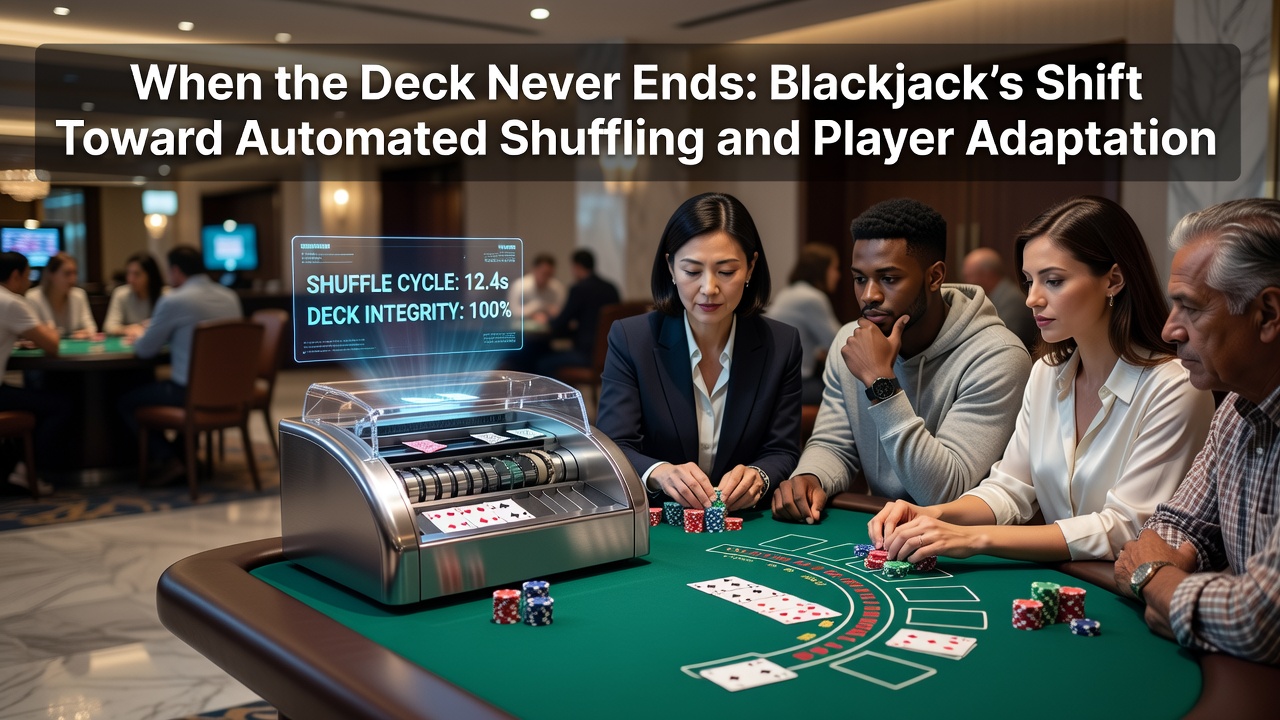
When the Deck Never Ends: Blackjack's Shift Toward Automated Shuffling and Player Adaptation
Blackjack tables have undergone a quiet transformation in recent years as casinos replace traditional hand-shuffled decks with automated shuffling machines that keep the game moving without pause. These devices, often called continuous shuffling machines or CSMs, mix cards back into play almost immediately after each hand, which changes how the game flows and how players approach their decisions. Data from multiple gaming jurisdictions shows that adoption rates climbed steadily through the 2010s and into the 2020s, driven by demands for faster rounds and reduced labor costs.
The Move Away from Manual Shuffling
Before automated systems became widespread, dealers would shuffle six or eight decks by hand at the end of each shoe, creating predictable windows where card counters could track remaining high or low cards. Observers note that this manual process allowed skilled players to gain an edge by adjusting bets and strategy based on the composition of the remaining deck, yet the practice also slowed table action and required trained staff. As casinos sought higher volume, manufacturers introduced machines that could shuffle and dispense cards without removing the deck from the table, a shift that accelerated after regulatory approvals in major markets such as Nevada and New Jersey.
Research from the University of Nevada, Las Vegas gaming studies program indicates that continuous shufflers reduce the effectiveness of traditional card counting by resetting the deck composition after nearly every round. Figures reveal that the average number of hands per hour rose from around 60-70 in manually shuffled games to over 100 when CSMs operate, according to industry reports compiled by casino operators. This change benefits house revenue while limiting opportunities for players who rely on tracking card flow across multiple hands.
How Automated Systems Operate in Practice
Modern shuffling machines use randomized mechanical arms or rollers to mix cards drawn from a discard tray and feed them back into the shoe at intervals determined by the device's programming. Technicians calibrate these units to comply with house rules, while regulatory inspectors verify that the randomization meets approved standards before tables open for play. Players who have watched the transition often describe the experience as seamless, with no visible pause between hands, yet the underlying mathematics of the shoe changes because the probability distribution resets more frequently.

According to a 2023 industry analysis published by the International Center for Gaming Regulation, more than 70 percent of blackjack tables in large U.S. casino resorts now incorporate some form of automated shuffling. The same report notes similar patterns in Australian and Canadian gaming venues, where operators cite reduced dealer fatigue and consistent game pace as primary motivations. Those who've studied the equipment emphasize that the machines do not alter basic rules such as dealer hit/stand decisions or payout ratios; instead they modify the frequency with which certain card combinations appear across successive rounds.
Player Strategies Under Continuous Shuffling
Card counting loses much of its power when decks reshuffle constantly, so players have adapted by focusing on basic strategy charts and table selection rather than tracking running counts. Data shows that side bets and progressive jackpots gain relative importance in CSM environments because the house edge on those wagers remains fixed regardless of shuffle method. Experts observe that some gamblers now seek out tables that still use manual shuffles, which remain available in certain high-limit rooms or during slower daytime hours, while others concentrate on games with favorable rules such as double after split or surrender options.
One documented case from a Las Vegas Strip property involved players forming informal groups to identify which tables still shuffled by hand, a practice that prompted casinos to rotate equipment more frequently. Studies conducted by independent researchers at the University of Macau's gaming research center found that adaptation also includes quicker decision-making at the table, since the rapid pace leaves less time for consultation or hesitation. Those adjustments keep the game playable even when traditional counting methods become impractical.
Industry Data and Regulatory Context
Figures compiled by state gaming boards across the United States indicate that automated shufflers appear most often on lower-limit tables where volume matters most, while premium games sometimes retain manual shuffling to attract high-stakes clientele. A report issued by the Alcohol and Gaming Commission of Ontario highlights comparable trends in Canadian casinos, where operators documented increased table utilization after installing CSMs in 2022. These records show no evidence that the machines change the fundamental house edge when basic strategy is followed correctly, yet they do compress the window during which skilled players can exploit deck composition.
Regulatory bodies continue to test machines for fairness and require periodic maintenance logs, which casinos must retain for inspection. Players who monitor equipment changes often note that certain manufacturers dominate the market, leading to standardized procedures across properties owned by the same corporate groups.
Conclusion
Automated shuffling has become a permanent feature of many blackjack floors, reshaping both the speed of play and the tactics available to participants. As more venues adopt the technology, players continue to refine their approaches around basic strategy precision, table selection, and awareness of game pace rather than relying solely on card tracking. The shift reflects broader operational priorities within the casino industry while maintaining the core mathematical structure of the game itself.