The Role of Burn Cards in Shaping Hand Distributions Across Blackjack Game Variants
Avery Franke · Jul 8, 2026
The Role of Burn Cards in Shaping Hand Distributions Across Blackjack Game Variants
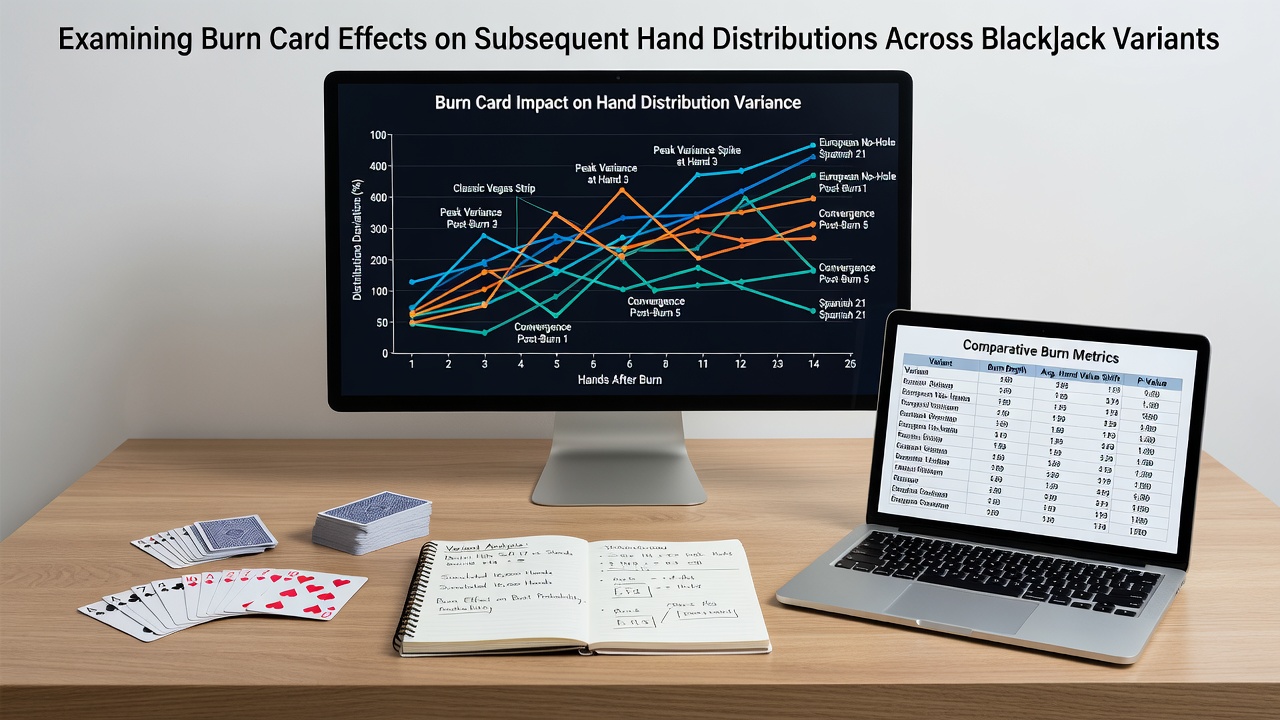
Blackjack procedures incorporate burn cards as standard practice across casino floors and online platforms, where dealers remove one or more cards from the top of a freshly shuffled deck or shoe before dealing begins, and this step directly influences the composition of cards available for the initial hands that follow. Researchers have tracked how these removals create measurable shifts in probability because each burned card reduces the remaining pool in a finite deck, altering the likelihood of specific ranks and suits appearing in player and dealer hands during the subsequent round or rounds.
Core Mechanics of Burn Card Application
Dealers typically burn a single card after the shuffle in multi-deck shoes, yet single-deck games often require burning one card at the start plus additional cards after each hand in some regional rulesets, while continuous shuffle machines in certain venues minimize the effect by reinserting cards rapidly. Data from regulatory audits shows that the exact number burned varies by jurisdiction and house policy, with some operations burning up to three cards to deter card marking or tracking attempts. Those who've analyzed shuffle sequences note that the burned cards come from the top after a random cut, meaning their identities remain unknown to players yet still subtract from the total deck composition in predictable statistical patterns.
Distribution Changes in Single-Deck and Double-Deck Formats
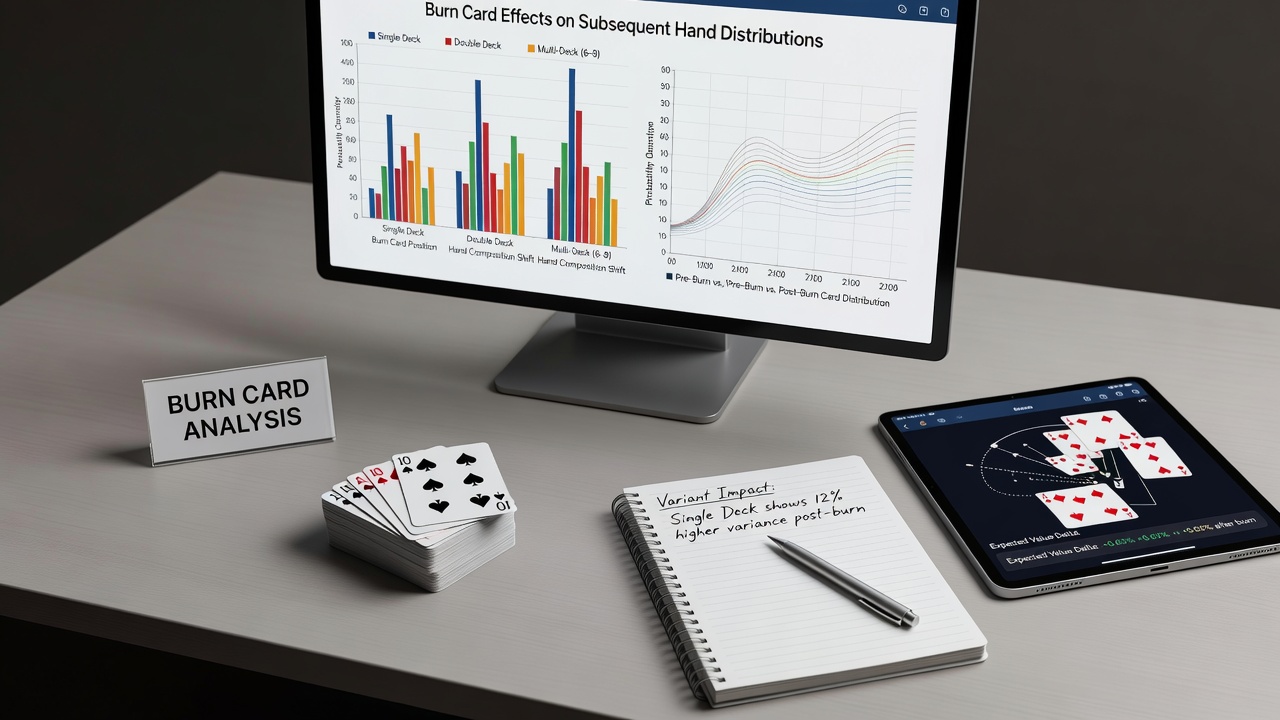
Single-deck blackjack exhibits the most pronounced effects because removing even one card represents a larger percentage of the total deck, and studies of hand outcome frequencies reveal slight elevations in certain dealer upcard probabilities when high-value cards occupy the burn position. Double-deck variants follow similar but attenuated patterns, where observers note that subsequent hands show adjusted chances for blackjack payouts and bust rates once the initial burn occurs, with the impact compounding if additional burns happen mid-shoe. Research indicates these shifts remain small in absolute terms yet accumulate across thousands of hands tracked in controlled simulations, producing measurable differences in expected value calculations compared to theoretical zero-burn baselines.
Multi-Deck Shoes and Cumulative Burn Effects
Shoes containing six or eight decks dilute the immediate influence of a single burn card, although the procedure still removes specific values that would otherwise enter play in the first few rounds, and data shows this creates minor but consistent deviations in pair splitting frequencies and soft hand totals. Continuous monitoring programs employed by gaming operators document how repeated burns over the course of a shoe gradually reshape remaining card ratios, particularly when high or low cards cluster near the top after the shuffle. What's interesting is how variant-specific rules interact with these mechanics, such as in games that allow players to request additional burns or that mandate burns after every round in low-limit settings.
Variant-Specific Patterns and Regional Practices
European blackjack rules often include a burn card plus a second burn after the first player receives cards, producing distribution shifts that differ from American multi-deck implementations where only one initial burn occurs, and figures from cross-jurisdictional comparisons highlight how these procedural differences affect ace and ten-value card frequencies in early hands. Australian and Canadian casino standards add further layers through unique shoe penetration rules that determine when reshuffles happen relative to burned cards, while Asian variants sometimes incorporate multiple burns tied to side bet resolutions. According to reports compiled by the Nevada Gaming Control Board, operators must maintain consistent burn procedures to ensure game integrity, and similar guidelines appear in oversight documents from the Alcohol and Gaming Commission of Ontario that emphasize transparent application across table games.
Simulation models used by mathematics departments at institutions such as the University of Nevada demonstrate that burn card placement creates non-random effects on subsequent hand distributions because the removed cards carry known rank probabilities based on uniform shuffling assumptions, leading to small adjustments in player strategy tables when precise composition-dependent decisions are required. Those monitoring live play across international markets have recorded instances where clustered burn cards of the same suit or value produce temporary imbalances that resolve only after several additional rounds deplete the shoe further.
Conclusion
Burn card procedures remain a foundational element of blackjack operations that subtly modifies hand distributions in every major variant through straightforward removal of cards from the active deck. Regulatory frameworks in multiple regions continue to standardize these practices while academic and industry analyses quantify their statistical footprint, offering operators and researchers clear data on how initial burns interact with deck size, shuffle frequency, and game-specific rules to shape outcomes in the rounds that immediately follow.