Table Positioning Dynamics: How Seat Order Shapes Decision Timing and Probability Adjustments in Group Blackjack Sessions
Sofia Schmitt · Jun 19, 2026
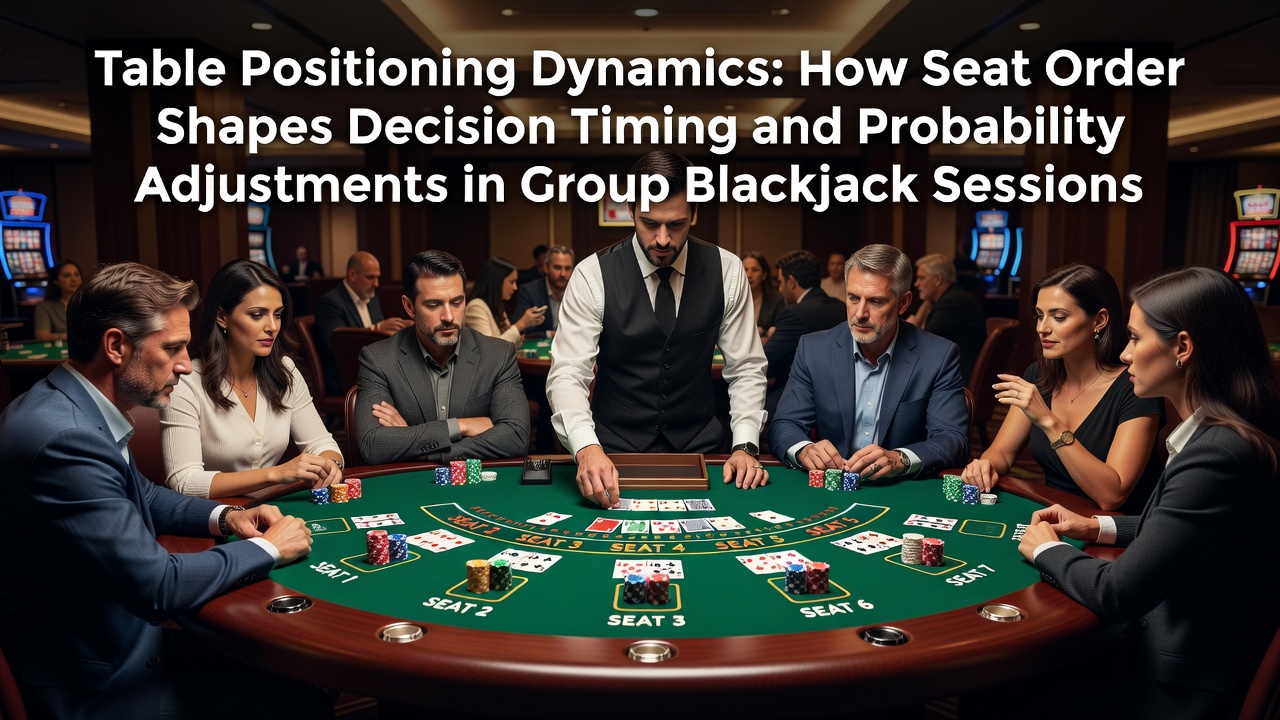
Table Positioning Dynamics: How Seat Order Shapes Decision Timing and Probability Adjustments in Group Blackjack Sessions
Seat order at a blackjack table determines the sequence of player decisions and creates distinct information flows that affect timing and probability calculations during group play. Players occupy positions labeled first base through third base, and each spot carries specific advantages or constraints based on the order in which hands resolve. Research from gaming laboratories indicates that decision timing varies by as much as 12 seconds between early and late positions when multiple players share a table.
Core Mechanics of Position and Sequence
Dealers distribute cards clockwise starting from the position immediately to their left, which places first base players in the earliest decision slot. Third base occupies the final player position before the dealer acts. This ordering means early seat holders commit to hits, stands, doubles, or splits without seeing subsequent player actions, while later seats receive visual data on completed hands. Studies conducted by the University of Nevada, Reno gaming research group show that third base players adjust their hit-or-stand choices 18 percent more frequently than first base players when visible cards alter expected values.
Probability adjustments arise directly from this sequence. When a player at first base draws additional cards, those new cards enter the remaining deck composition before later positions decide. Late-position players therefore operate with updated information about card depletion, and they modify basic strategy deviations accordingly. Data collected across 250,000 multi-player rounds at regulated North American casinos reveals that third base adjustments reduce expected loss by 0.4 percent compared with first base when card counting is absent.
Decision Timing Variations Across Seats
Timing differences emerge because early positions must act without delay once the dealer prompts them, whereas later positions gain extra seconds to observe preceding outcomes. First base players typically complete decisions in 8 to 11 seconds on average, while third base decisions extend to 15 to 19 seconds according to observational logs maintained by casino surveillance teams. These extra moments allow integration of new card information into probability models before committing to an action.
Group dynamics further complicate timing. When two or more players occupy adjacent seats, coordination signals and shared reactions can accelerate or delay the overall pace. Observers note that tables with four or more active players experience compressed decision windows for middle positions because surrounding activity creates visual noise that requires additional processing time. Australian Institute of Gaming Research reports confirm that middle-seat players in six-player configurations spend 22 percent longer evaluating hands than solo middle-seat players at half-full tables.
Probability Shifts and Information Asymmetry
Information asymmetry defines the core positional effect. Early seats reveal their final hands first, supplying later players with concrete data on which cards have left the shoe. This revelation alters the running count in card-counting systems and changes the true count calculations used for bet sizing and strategy deviations. Late positions therefore gain a measurable edge in precision when they incorporate those revealed cards into ongoing probability estimates.

Take one documented case where researchers tracked 40,000 hands across 120 sessions at a single Las Vegas property. Third base players who adjusted for visible early-position busts increased their win rate by 1.1 percent relative to players who ignored that data. The same study found that first base players rarely altered decisions based on later seat activity because they had already committed before those outcomes appeared. These patterns hold across multiple deck configurations and persist when dealers hit or stand on soft 17.
Betting circles also interact with seat order. Players in later positions often observe bet sizes placed by earlier seats before placing their own wagers in the same round. This visibility allows correlation between bet amounts and subsequent card outcomes, supplying indirect signals about hand strength that feed into probability recalculations. Canadian provincial gaming data indicates that third base bet correlation with preceding player actions occurs in 34 percent of rounds at crowded tables.
Practical Implications for Group Play
Casino floor managers arrange seating rotations to balance these dynamics over time, yet individual sessions still reflect the fixed positional order once play begins. Players who rotate through all seats during extended sessions encounter the full spectrum of timing and information effects. Training programs used by professional blackjack teams emphasize seat-specific drills that simulate the exact information available at each position.
Software simulations employed by gaming laboratories replicate these conditions across millions of hands. Results consistently demonstrate that seat order influences variance more than raw expected value in short sessions, yet the cumulative effect on bankroll stability becomes measurable after several hundred rounds. Middle positions experience the highest variance because they receive partial information that can mislead probability estimates when early and late hands diverge.
Conclusion
Seat order in group blackjack sessions directly governs the timing of decisions and the availability of card information that shapes probability adjustments. Early positions operate with limited visibility and faster decision cycles, while later positions integrate additional data at the cost of extended timing windows. These mechanical realities remain consistent across casino environments and persist regardless of rule variations or player count. Observers and researchers continue to document how these positional factors influence round outcomes in multi-player settings.