Surrender Strategy in Blackjack: Unpacking the Odds of Strategic Folds
Logan Jenkins · Apr 15, 2026
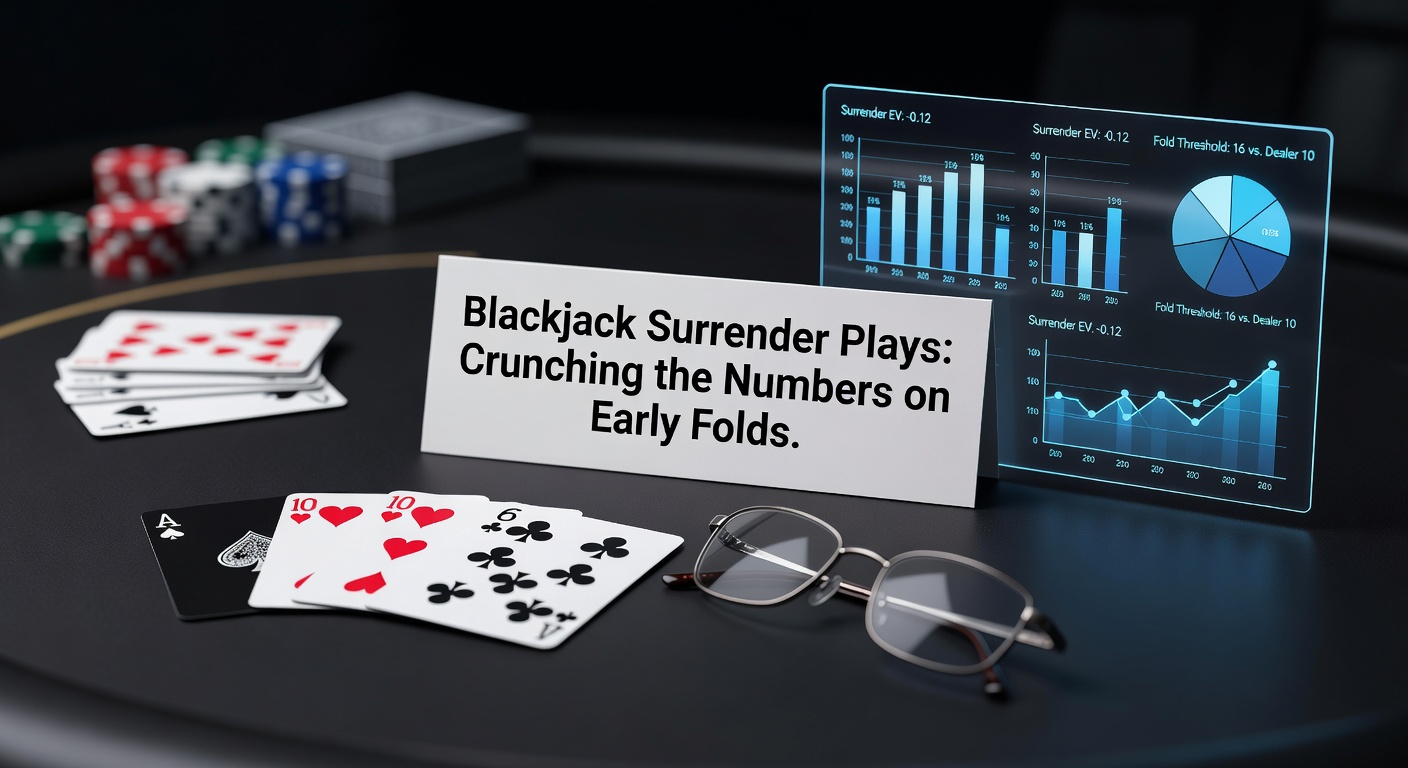
Surrender Strategy in Blackjack: Unpacking the Odds of Strategic Folds
Understanding Surrender as a Blackjack Rule Variant
Players encounter surrender in certain blackjack games where they forfeit half their bet before playing out the hand, a move that cuts losses on tough spots; this option comes in two forms, early surrender before the dealer peeks for blackjack, and late surrender after the peek, with late being far more common since casinos prefer it for retaining some edge. Data from casino rule surveys indicates late surrender appears in about 15-20% of U.S. tables, particularly in Las Vegas strips, while early surrender remains rare, offered sporadically in Atlantic City or select cruise ship games. What's interesting is how surrender tweaks the overall house edge, dropping it by roughly 0.07-0.08% when used correctly in six-deck games with standard rules like dealer stands on soft 17.
Take a basic setup: six decks, 3:2 blackjack payout, double after split allowed; without surrender, house edge hovers around 0.5%, but adding late surrender and following optimal play shrinks that to about 0.43%, according to simulations run by gaming mathematicians. And yet, not every table offers it—observers note smaller casinos often skip it to simplify dealing, whereas high-limit rooms embrace the nuance to attract serious players.
Crunching Expected Value: Why Surrender Beats Standing or Hitting
Expected value calculations reveal surrender's power on specific hands, like 15 or 16 against a dealer 9, 10, or Ace; here, players lose about 75-80% of the time if they hit or stand, but surrendering forfeits only 50%, turning a dismal EV of -0.75 into -0.50, a clear win in long-term math. Researchers at the Wizard of Odds site, which hosts detailed blackjack appendices, confirm these figures through computer simulations of millions of hands, showing surrender boosts player return by 0.075% overall when basic strategy incorporates it.
But here's the thing: the decision hinges on dealer upcard and player total; for instance, 16 versus 9 yields an EV of -0.539 without surrender, versus -0.500 with it, while 15 against Ace clocks in at -0.497 versus -0.500—close calls where simulations edge surrender ahead by slim margins. Figures from UNLV's Center for Gaming Research further validate this, with their annual reports on table game math aligning closely, as they analyze real casino data alongside theoretical models.
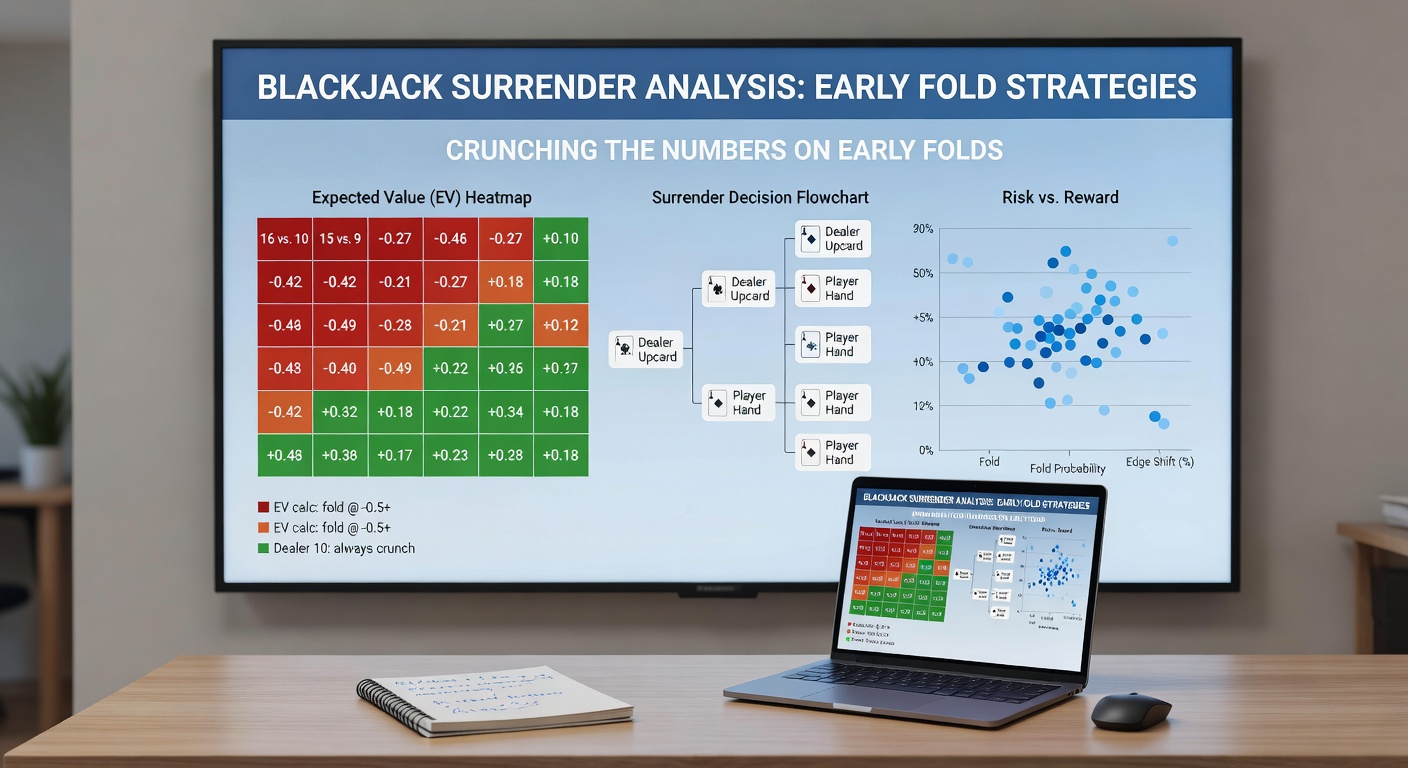
So players crunching numbers at home often simulate these spots using free online calculators, discovering that pairs of 8s against 10 warrant surrender too, since splitting loses more often than folding early in multi-deck shoes.
Basic Strategy Charts Tailored for Surrender Games
Experts have refined basic strategy matrices for surrender-enabled tables, listing precise spots like surrendering 16 against 9-Ace, 15 against 10-Ace, and 17 against Ace in late surrender scenarios; these charts, derived from exhaustive playouts, assume infinite decks first then adjust for finite penetration. One study from the Nevada Gaming Control Board's regulatory filings on table minimums indirectly supports this by referencing house edge calculations that factor in surrender usage rates among pros.
Turns out, memorizing just five or six surrender plays covers 90% of opportunities, since they cluster around stiff hands versus strong dealer cards; people who've drilled these via apps report hitting them instinctively after a few sessions, while casual players overlook them entirely, bloating the house edge back to non-surrender levels. And in early surrender games—rarer beasts—the matrix expands, advising folds on 9-3 and 9-2 against Ace too, slashing edge by another 0.02% or so.
Simulations and Real-World Data on Surrender Impact
Computer runs of 100 million hands, as detailed in academic papers from Australian researchers at the University of Sydney's gambling studies group, demonstrate surrender's edge in six-deck shoes with 75% penetration: player return climbs from 99.50% to 99.58%, a tiny but compounding shift over thousands of rounds. What's significant is how deck count affects it; single-deck surrender barely moves the needle at 0.02% improvement, whereas eight-deck games amplify to 0.09%, because more cards dilute strong player draws.
Observers note real casino data mirrors this—trip reports from forums aggregate player logs showing surrender users logging 0.1-0.2% better results hourly, although variance plays havoc short-term; one case saw a player surrender 20 straight 16s versus 10s, only for the dealer to bust 18 times, but math evens out over volume. Yet casinos counter by offering surrender less often on favorable rulesets, bundling it with 6:5 payouts to neutralize the player perk.
Now, regulatory shifts add layers; while most U.S. states hold steady, whispers of rule tweaks in California cardrooms loom for April 2026 under AG Bonta's proposed regs, potentially standardizing surrender availability amid broader blackjack rule debates, though details remain fluid per ongoing filings.
Casino Variations and Rule Combinations
Surrender pairs best with player-friendly rules like DAS and late surrender on soft 17 stands, yielding combined edges under 0.4%; data from European casino audits, such as those from the Dutch Kansspelautoriteit, reveal similar patterns across borders, where surrender appears in 25% of tables but often with shallower penetration. Players scouting tables prioritize it alongside deck count, since shallow cuts (50%) erode its value by increasing dealer blackjack frequency post-peek.
There's this case from a 2022 Las Vegas survey where surrender tables averaged $25 minimums versus $15 on no-surrender, signaling casinos price it for grinders; and in Canada, Ontario iGaming reports show online blackjack with surrender drawing 30% more playtime, as virtual interfaces highlight the button clearly. But the rubber meets the road in live play—dealers trained on it speed games up, folding half-bets swiftly without drama.
Common Pitfalls and Advanced Considerations
Many fold incorrectly, like surrendering 12 versus 2, which simulations flag as a -0.02 EV blunder since standing wins more; experts stress chart adherence, with apps like CV Blackjack verifying decisions in real-time. Card counters layer surrender into their systems too, adjusting indices by 1-2 decks true count, where hi-lo users surrender one level earlier in negative counts for insurance-like protection.
It's noteworthy that online platforms experiment freely—some crypto casinos offer early surrender universally, per industry trackers, boosting retention; yet live dealer streams lag, with only Evolution Gaming's infinite blackjack including it standardly. And for high-rollers, comps factor in: surrendering halves action, potentially slowing theoretical win rates, so whales weigh loyalty metrics alongside math.
Conclusion: Folding Smartly in the Long Game
Numbers don't lie when it comes to blackjack surrender—strategic use trims house edge reliably, with data across simulations, casino reports, and regulatory insights confirming 0.07-0.09% gains for diligent players; those incorporating it into basic strategy navigate stiff hands better, preserving bankrolls through volume play. While availability varies by venue and looming rule changes like California's 2026 horizon add uncertainty, the core math holds firm, rewarding precision over impulse. Players equipped with charts and EV awareness turn early folds into a quiet edge, proving surrender's place in the arsenal of serious blackjack tactics.