Pivot Points at Eleven: Analyzing Card Flow Influences on Doubling Decisions in Multi-Deck Blackjack Environments
Avery Franke · Aug 5, 2026
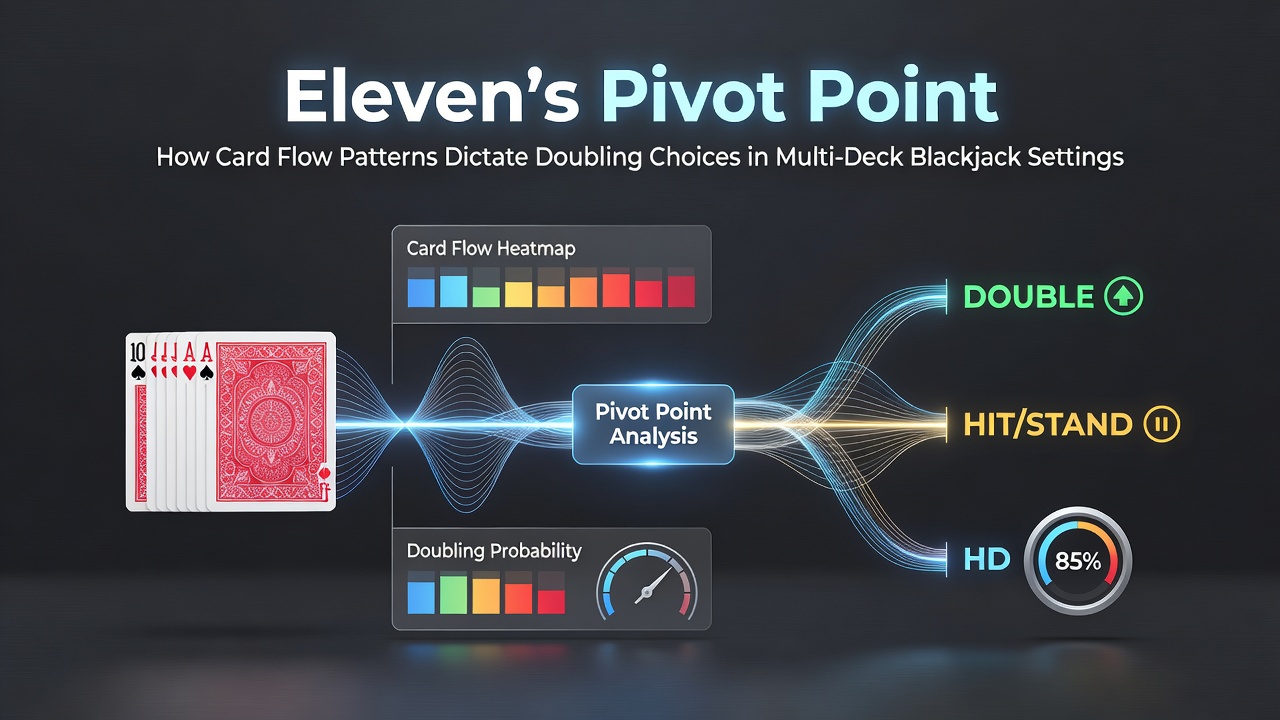
Pivot Points at Eleven: Analyzing Card Flow Influences on Doubling Decisions in Multi-Deck Blackjack Environments
Card flow patterns in multi-deck blackjack create measurable shifts in the expected value of doubling on eleven, and those shifts arise directly from the removal sequences that alter remaining deck composition. Observers note that standard basic strategy calls for doubling eleven against dealer upcards from two through ten, yet running counts and specific card removal clusters modify the precise advantage at different penetration levels. Data from probability models indicate that positive counts increase the frequency of favorable doubling opportunities, while negative counts reduce them, and these adjustments become more pronounced as the shoe progresses beyond the midpoint.
Core Mechanics of Doubling on Eleven
Eleven offers the highest potential for doubling because it sits one card away from twenty-one, and the decision hinges on whether the next card improves the hand enough to overcome the dealer’s possible totals. In multi-deck settings researchers have documented that the base house edge on this play stays near 0.2 percent under neutral conditions, but the edge flips positive once the running count rises above +2 in Hi-Lo systems. Card flow dictates these flips because tens and aces removed early leave more low cards in the remaining decks, which lowers the likelihood of drawing a ten-value card for the double.
How Running Counts Interact With Shoe Composition
Players track the ratio of high to low cards through continuous counts, and those ratios directly govern whether doubling eleven retains its edge against each dealer upcard. Studies show that when the true count reaches +3 or higher the expected value of doubling eleven versus a dealer ten climbs above 0.5 percent, whereas the same play at a true count of -2 drops below breakeven. Multi-deck shoes amplify these effects because the larger card pool dilutes single-card impacts, requiring sustained imbalances before the count signals a strategy deviation. And yet the pivot occurs earlier than many anticipate once several high cards have already left the shoe in the first third of play.
Card Removal Clusters and Their Measurable Effects
Certain sequences of removed cards produce outsized impacts on the doubling decision. When three or more tens exit the shoe within a single round the remaining deck favors low-card draws, which reduces the payoff from doubling eleven even at moderately positive counts. Conversely, clusters of low cards removed early leave a higher proportion of tens and aces, elevating the value of the double. Figures from simulation databases reveal that these clusters shift the optimal decision threshold by roughly one true-count unit compared with average shoe states. Observers tracking live games note that such patterns appear more frequently after reshuffles that concentrate high cards at the front of the shoe, creating brief windows where doubling becomes mandatory at lower counts than basic strategy alone would suggest.
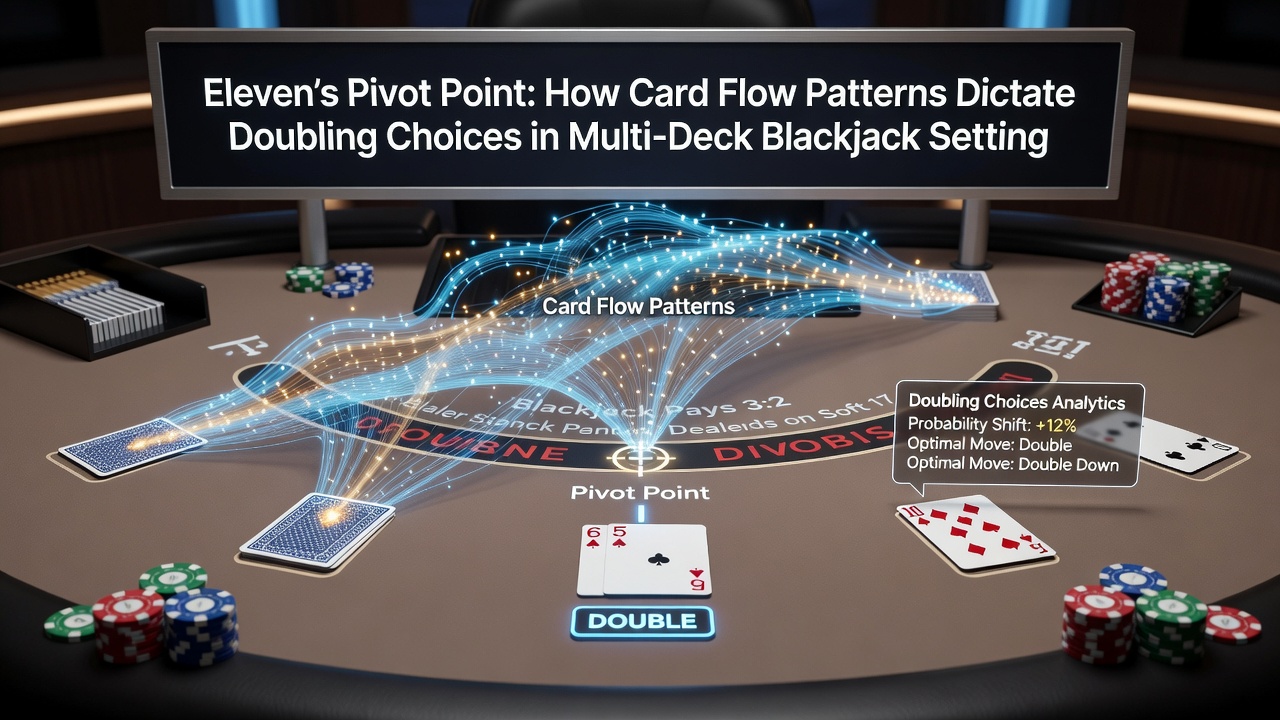
Practical Threshold Adjustments Across Penetration Levels
Penetration depth changes the weight of each count signal because fewer cards remain to correct imbalances. At 75 percent penetration a true count of +1 already justifies doubling eleven against a dealer nine in many multi-deck configurations, whereas the same count at 50 percent penetration leaves the play neutral. Research indicates that the variance in outcome also widens as penetration increases, because the remaining deck composition becomes more extreme. Those who monitor these thresholds adjust their doubling frequency by tracking both the current true count and the approximate number of decks left, producing a dynamic decision matrix rather than a static rule. Data collected across thousands of shoes demonstrate that such count-adjusted doubling increases overall return by 0.15 to 0.25 percent when applied consistently.
Regional Regulatory Context and Data Availability
Regulatory bodies publish aggregate game statistics that indirectly support these probability calculations. The Nevada Gaming Control Board releases monthly reports on table game hold percentages that align with modeled outcomes for count-dependent strategies. Similar datasets from the Alcohol and Gaming Commission of Ontario provide cross-regional confirmation that multi-deck doubling edges behave consistently when card flow patterns are accounted for. These public figures allow analysts to calibrate simulation models without relying on anecdotal observation alone.
Conclusion
Card flow patterns in multi-deck blackjack therefore function as the decisive variable that determines when doubling on eleven crosses from standard play into count-driven opportunity. Sustained imbalances shift the expected value by measurable amounts at each penetration stage, and players who integrate running count data with observed removal sequences obtain a clearer picture of optimal doubling frequency. Ongoing simulation research continues to refine these thresholds, confirming that the interaction between card flow and doubling choices remains one of the more quantifiable edges available within standard multi-deck rulesets.