Insurance Bets Examined: Frequency Patterns and Their Effects in Multiple Casino Landscapes
Devon Schmid · Jul 22, 2026
Insurance Bets Examined: Frequency Patterns and Their Effects in Multiple Casino Landscapes
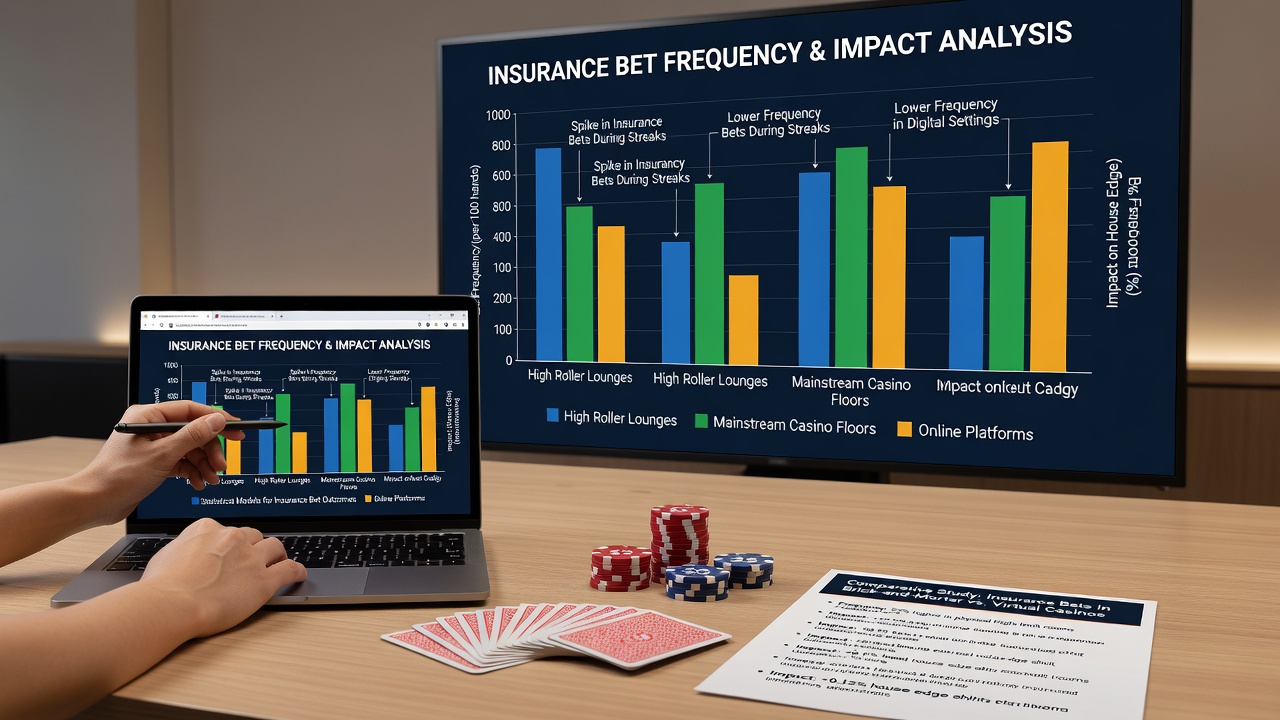
Insurance bets represent a distinct side wager in blackjack that activates when the dealer reveals an ace as the upcard, and players place this optional bet in amounts up to half their original wager to receive a 2-to-1 payout if the dealer holds blackjack. Data from multiple gaming jurisdictions shows that insurance participation rates vary significantly depending on the casino environment, with land-based venues in high-traffic tourist areas recording higher frequencies than regional cardrooms or online platforms.
Observers note that frequency often correlates with player demographics and table minimums, whereas impact calculations hinge on the mathematical probability that the dealer completes a blackjack hand, which stands at roughly 30.8 percent when the upcard is an ace. Research indicates that consistent insurance play without card counting increases the house edge by approximately 7.4 percent on that specific wager, shifting overall session outcomes for participants who engage regularly.
Regional Variations in Insurance Usage
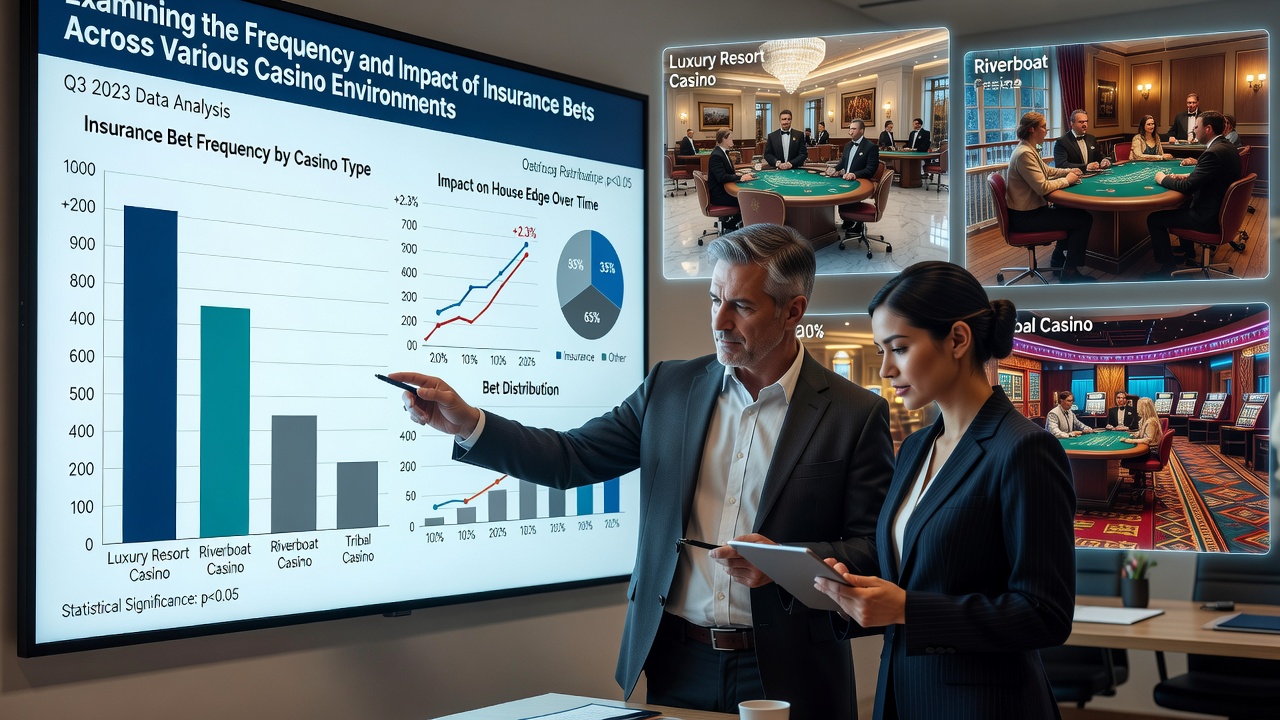
Casino floors in Nevada demonstrate elevated insurance bet frequencies compared with those in Atlantic City, and figures from the Nevada Gaming Control Board reveal that insurance wagers account for nearly 12 percent of total side-bet volume during peak evening hours at Strip properties. European casinos operating under different rule sets, such as those in Malta and Gibraltar, report lower participation rates around 6 to 8 percent, largely because many tables enforce continuous shuffling machines that reduce opportunities for informed decisions.
Online environments present yet another pattern, where automated interfaces prompt insurance offers more prominently and data from platform analytics shows participation climbing during promotional periods that award bonus credits on side bets. Australian venues regulated by state authorities display moderate frequencies, with researchers documenting that insurance bets appear in roughly one out of every nine eligible hands at major Sydney and Melbourne properties.
Mathematical Impact on Player Expectations
Insurance alters the expected value of a hand once the dealer shows an ace, and players who accept the bet without knowledge of remaining deck composition face a negative expectation that compounds over repeated decisions. Studies conducted by university mathematics departments have quantified how insurance frequency interacts with basic strategy deviations, demonstrating that selective use based on true count can reduce the overall house advantage by as much as 0.3 to 0.5 percent in multi-deck games.
Impact extends beyond individual hands because insurance volume influences table pace and dealer procedures, with higher frequencies correlating to longer resolution times per round. Casino operators in competitive markets adjust table limits and insurance payout structures in response to observed patterns, and some properties have introduced insurance-specific promotions that temporarily increase participation without altering core payout ratios.
Regulatory Developments and July 2026 Changes
Upcoming regulatory adjustments scheduled for July 2026 in several North American jurisdictions will require clearer disclosure of insurance odds on digital displays and printed table signage, aiming to standardize player information across environments. These measures follow earlier clarifications issued by state gaming commissions and are expected to affect both land-based and online operators that offer blackjack variants.
Analysts tracking pre-implementation data anticipate modest shifts in frequency once standardized signage appears, particularly in venues where current signage remains minimal. Industry reports compiled by the Canadian Gaming Association indicate that similar transparency requirements introduced in Ontario produced a 4 percent decline in insurance participation within the first six months after rollout.
Comparative Data Across Casino Formats
High-limit salons within integrated resorts record the highest insurance frequencies because players at those tables often maintain larger bankrolls and experiment with side bets more freely, whereas low-limit and electronic blackjack terminals show reduced activity. Online live-dealer streams mirror land-based patterns most closely when the same rule sets apply, yet automated RNG tables without visible card counts display consistently lower insurance volumes.
Asian casino markets, including those in Macau and Singapore, present distinct profiles where insurance bets appear less frequently due to cultural preferences for main-bet action and different commission structures on table games. Data collected across these regions suggests that insurance volume remains below 5 percent of eligible opportunities, contrasting sharply with North American averages.
Conclusion
Insurance bets continue to occupy a measurable portion of blackjack activity across global casino environments, with frequency and impact shaped by regulatory frameworks, table technology, and player composition. Available statistics demonstrate clear differences between land-based tourist destinations, regional cardrooms, and online platforms, while mathematical models confirm the wager's negative expectation under standard conditions. Regulatory updates planned for July 2026 will introduce additional transparency measures that may further influence participation rates in affected jurisdictions.