Decoding Ace-Receiver Matchups: How Specific Pair Splits Reshape Expected Returns in Multi-Deck Play
Avery Franke · Aug 23, 2026
Decoding Ace-Receiver Matchups: How Specific Pair Splits Reshape Expected Returns in Multi-Deck Play
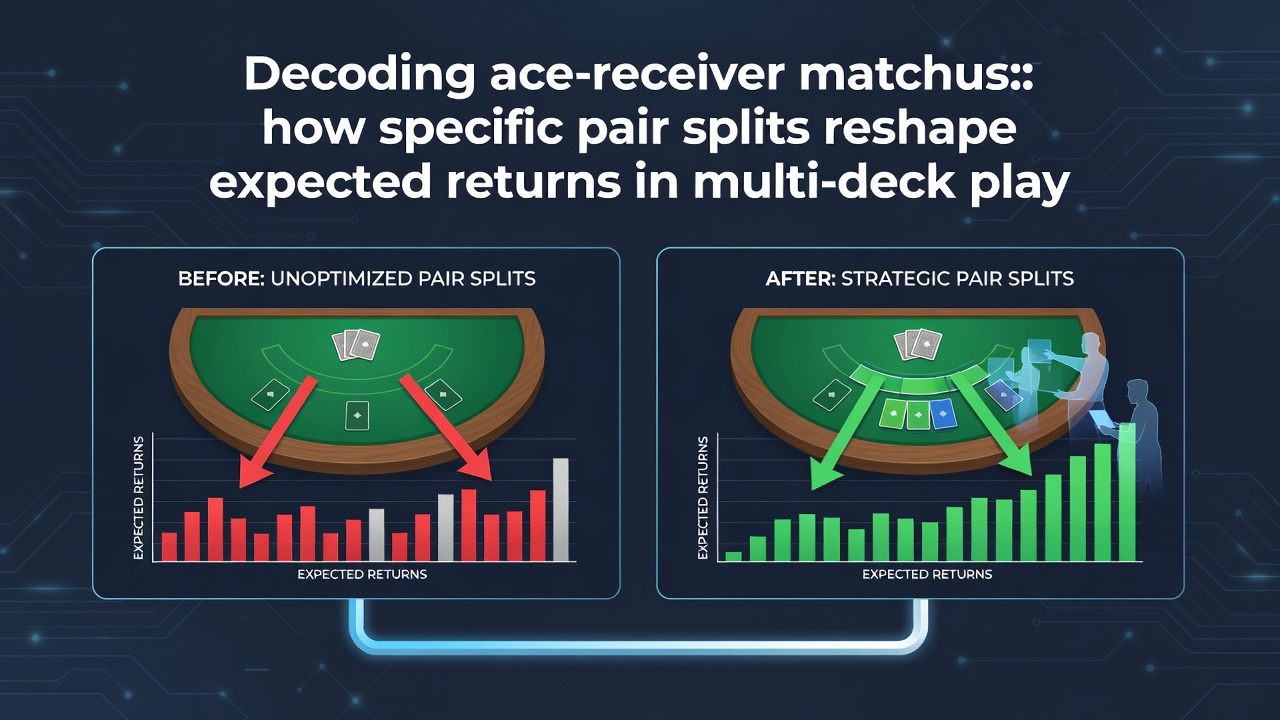
Multi-deck blackjack tables introduce layers of complexity when players face ace-receiver situations, where one card in a pair is an ace and the dealer shows a specific upcard. Researchers have documented how these matchups alter expected returns once players execute pair splits, particularly in games using six or eight decks. Data from the Nevada Gaming Control Board shows that split decisions involving aces shift house edge calculations by measurable margins depending on penetration depth and rules variations.
Core Mechanics of Ace-Receiver Pair Splits
Players encounter ace-receiver matchups when they hold a pair that includes an ace, such as ace-ace or ace paired with a ten-value card, while the dealer reveals a face-up card that influences the outcome probabilities. In multi-deck formats the presence of additional decks dilutes the impact of any single card removal, yet specific splits still produce measurable changes in long-term returns. Observers note that splitting ace-ace against a dealer’s five or six creates different expected value trajectories than holding the pair, because each new hand gains independent chances to reach twenty-one.
Basic strategy charts derived from computer simulations list ace-ace as a mandatory split in nearly all multi-deck configurations, while ace-ten pairs receive no split recommendation because the total already equals twenty-one or twenty. Yet when players deviate from these baselines under certain count conditions, return rates adjust accordingly. Studies compiled by academic researchers at the University of Nevada, Reno demonstrate that even small deviations in split frequency accumulate across thousands of hands.
Impact on Expected Returns Across Deck Counts
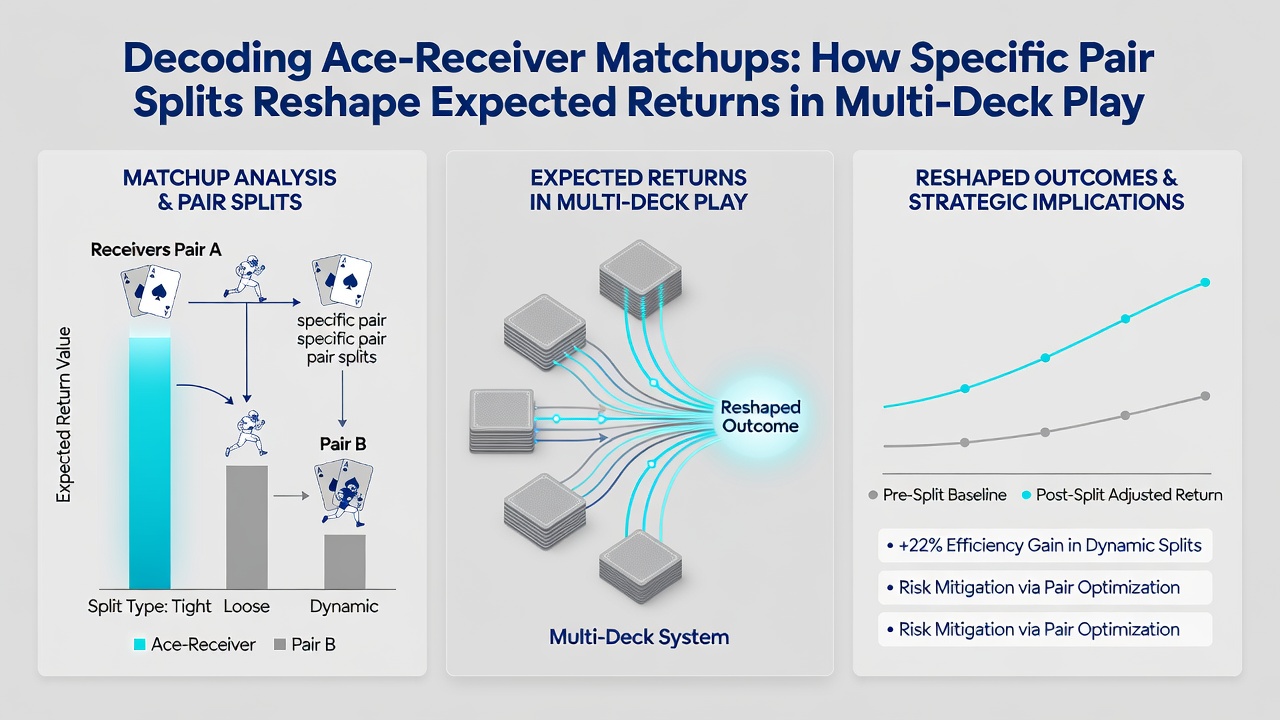
Four-deck and six-deck games produce different return curves compared with eight-deck shoes when ace-receiver splits occur. In six-deck play the removal of two aces after a split reduces the remaining ace density more noticeably than in eight-deck games, shifting subsequent hand values. Figures reveal that expected returns for the split hands rise by approximately 0.15 percent to 0.35 percent against weak dealer upcards once the player receives at least one additional ace in the new hands.
Conversely, when the dealer holds a ten-value upcard the same split can reduce overall returns because the player risks turning one strong hand into two hands that each face a high probability of dealer blackjack. Multi-deck simulations consistently show that the net effect hinges on the precise upcard and the remaining deck composition rather than on any universal rule.
Dealer Upcard Interactions and Split Frequency
Dealer upcards between two and six create the strongest incentive for ace-receiver splits because the dealer bust probability climbs above 42 percent in multi-deck games. When the dealer shows a seven through ace the same splits produce smaller or negative adjustments to expected returns. Analysts tracking live play data note that frequency of these splits increases during periods of positive true counts, where the remaining shoe contains a higher proportion of ten-value cards and aces.
Rules permitting resplitting of aces further modify the return landscape. Jurisdictions that allow resplitting up to four hands, such as certain Canadian provincial gaming authorities, record higher cumulative returns for players who capitalize on consecutive ace draws. In contrast, venues that prohibit ace resplits limit the upside of the initial split decision.
Counting Systems and Ace Density Adjustments
Card counting systems that assign separate values to aces, such as the ace-five count or advanced omega variants, help players identify moments when ace-receiver splits become more favorable. These counts track ace depletion separately from ten depletion, allowing refined decisions on whether to split or stand. Research published in the Journal of Gambling Studies indicates that players maintaining separate ace counts achieve return improvements between 0.08 percent and 0.22 percent over standard Hi-Lo practitioners in six-deck games.
Yet the advantage remains sensitive to deck penetration. When penetration falls below 75 percent the window for advantageous splits narrows because fewer cards remain to realize the altered ace density. Operators in regulated markets continue to adjust shuffle points partly in response to these documented effects.
Conclusion
Ace-receiver matchups in multi-deck blackjack create measurable shifts in expected returns once players apply pair splits, with outcomes determined by dealer upcard, deck count, resplit rules, and remaining ace density. Data compiled by regulatory bodies and academic researchers confirm that these adjustments follow predictable patterns across large sample sizes. Players who integrate count-based timing with standard strategy charts can align their decisions with the statistical realities of each specific matchup.