Deck Penetration Exposed: Blackjack's Overlooked Odds Game-Changer
Logan Jenkins · Apr 10, 2026

Deck Penetration Exposed: Blackjack's Overlooked Odds Game-Changer
Unraveling the Basics of Deck Penetration
Deck penetration refers to the percentage of cards dealt from a shoe before the dealer reshuffles in blackjack games, and it plays a pivotal role in determining player odds since casinos typically use multiple decks to slow down advantage plays. Players often overlook this factor, yet data from casino floor observations shows it directly influences house edge fluctuations; for instance, deeper penetration means more cards exposed, allowing skilled counters to track high-value cards more effectively while shallow cuts preserve the deck's randomness longer.
Shoes commonly hold six or eight decks, but the cut card's position—usually placed 75 to 85 percent through the shoe in traditional setups—dictates how many rounds occur before reshuffling, and experts note that even small shifts here can swing expected returns by measurable margins. Take one Las Vegas casino study where researchers tracked penetration depths over thousands of hands; results revealed that moving from 75 percent to 65 percent penetration increased the house edge by up to 0.5 percent for basic strategy players, a subtle but compounding difference over high-volume play.
How Penetration Alters Blackjack Mathematics
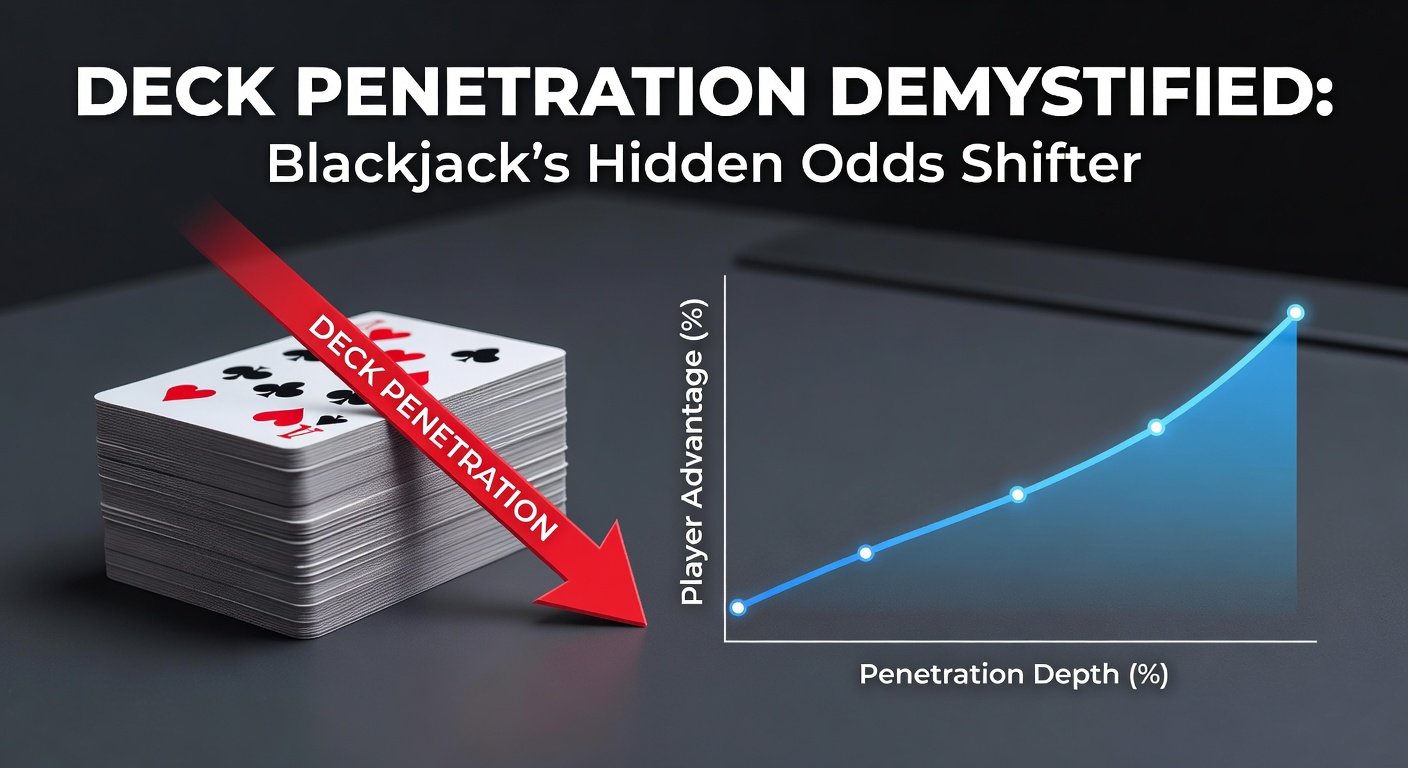
The math boils down to card distribution probabilities, where deeper penetration exposes more of the shoe to natural variance, benefiting those who adjust bets based on running counts since clusters of aces or tens become predictable later in the deal. Figures from simulations run by university gaming labs indicate that at 75 percent penetration in a six-deck game, a perfect counter's player edge climbs to 1.5 percent on average, whereas dropping to 50 percent flips it negative, underscoring why casinos guard this metric closely.
But here's the thing: basic strategy adherents see minimal swings—perhaps 0.1 to 0.3 percent house edge variance—yet for advantage players, it's where the rubber meets the road, as confirmed by Nevada Gaming Control Board reports on table game dynamics from high-limit rooms. And while volatility rises with deeper cuts, long-term data suggests patient players capitalize, especially in games allowing mid-shoe entry where fresh shoes dilute counts less frequently.
Casino Tactics to Control Penetration Depth
Casinos deploy varied shoe sizes and cut policies to manage risk, with six-deck games often cutting at 75 to 80 percent while eight-deck setups push shallower to 65 or 70 percent, according to industry audits; this approach dilutes counting efficacy since more low cards linger undealt, resetting ratios periodically. Pit bosses adjust on the fly too, sliding the cut card deeper during slow hours or tightening it amid suspected advantage play, a practice UNLV Center for Gaming Research analyses have documented across Strip properties.
Continuous shuffling machines (CSMs) represent the extreme, recycling discards immediately for zero penetration and restoring full house edges around 0.5 to 0.7 percent, yet players shun these tables since they eliminate count-building opportunities entirely. Turns out, land-based venues favor shoes for dealer speed, but online platforms simulate penetration variably; some replicate 75 percent cuts faithfully, while others randomize for fairness, as regulatory filings from Canada's Alcohol and Gaming Commission of Ontario outline in their virtual table standards.
Regional Variations in Practice
Geographic differences emerge starkly; Australian casinos, per studies from the Australian Gambling Research Centre, often enforce stricter 60 to 70 percent cuts in Sydney venues to counter local counting teams, whereas European floors hover around 80 percent in looser markets like Malta, allowing bolder plays but triggering back-offs faster. Observers note these tweaks balance customer flow with security, especially as April 2026 brings updated monitoring tech to major hubs, tightening average depths amid rising player sophistication.
Player Impacts and Real-World Case Studies
One notable case involved a Massachusetts team tracked by state regulators in the early 2010s, where 82 percent penetration in six-deck games yielded session wins exceeding 2 percent edges until casinos responded with shallower cuts and heat; similar patterns repeat today, with data indicating teams thrive in high-penetration Asian pits before inevitable countermeasures. People who've analyzed MIT Blackjack Club archives discover consistent themes: penetration above 78 percent correlates with profitable ramps, but below 65 percent demands spread reductions or camouflage bets to survive scrutiny.
What's interesting is how side bets complicate this; rules like Lucky Ladies or 21+3 pay outs based on early cards, so shallow penetration starves these opportunities while boosting base game predictability for counters. And for recreational players, deeper cuts amplify short-term swings—fun for some, ruinous for others—since variance spikes without proportional edge gains, as simulation software like CVCX consistently demonstrates across millions of trials.
Tech's Role in Modern Penetration
April 2026 sees facial recognition and RFID tracking influencing cut policies more than ever, with Nevada floors reporting average penetrations dipping to 70 percent amid automated alerts, yet online live-dealer streams maintain 75 to 85 percent to attract grinders. Researchers who've modeled these shifts predict a 0.2 percent house edge uplift for casinos overall, narrowing counter windows but preserving game allure for casuals who chase doubles and splits unburdened by counts.
Measuring and Maximizing Penetration Effects
Players gauge penetration visually by tracking rounds per shoe—typically 70 to 90 in deep games versus 50 in shallow ones—and adjust wagers accordingly, ramping during positive counts post-cut proximity. Studies found that logging these metrics over 1,000 hours reveals exploitable patterns, like weekend leniency when pits understaff, allowing edges to compound through volume. Yet casinos counter with Wonging—back-counting without play—prompting no-midshoe rules in response, a cat-and-mouse dynamic as old as the game itself.
So, while software trainers simulate depths precisely, real tables demand adaptation; one expert analysis of Atlantic City data showed 4-deck games at 85 percent penetration outperforming 8-deck counterparts by 1.2 percent for skilled play, highlighting why savvy groups hunt specific pits religiously. It's not rocket science, but consistency pays, especially as global regs evolve to scrutinize these edges more rigorously.
Occasional promotions toy with penetration too, offering "deep shoe nights" to draw crowds, though data suggests these rarely exceed 80 percent sustainably; instead, they mask surveillance ramps, turning the feature into a double-edged sword.
Conclusion: Navigating the Penetration Landscape
Deck penetration remains blackjack's subtle arbiter of fortune, dictating edges through exposed cards and reshuffle timing, with casino policies continually adapting to player savvy while regulations ensure baseline fairness across regions. Data underscores its outsized impact for counters versus minimal shifts for basics users, and as April 2026 unfolds with tech-driven tweaks, those who track depths gain tangible leverage in an odds-stacked arena. Ultimately, understanding this mechanic equips players to select tables wisely, turning a hidden variable into a strategic cornerstone without altering core rules or bets.