Dealer Soft 17 Rules and Their Influence on Blackjack Doubling and Splitting Patterns
Devon Schmid · Aug 12, 2026
Dealer Soft 17 Rules and Their Influence on Blackjack Doubling and Splitting Patterns
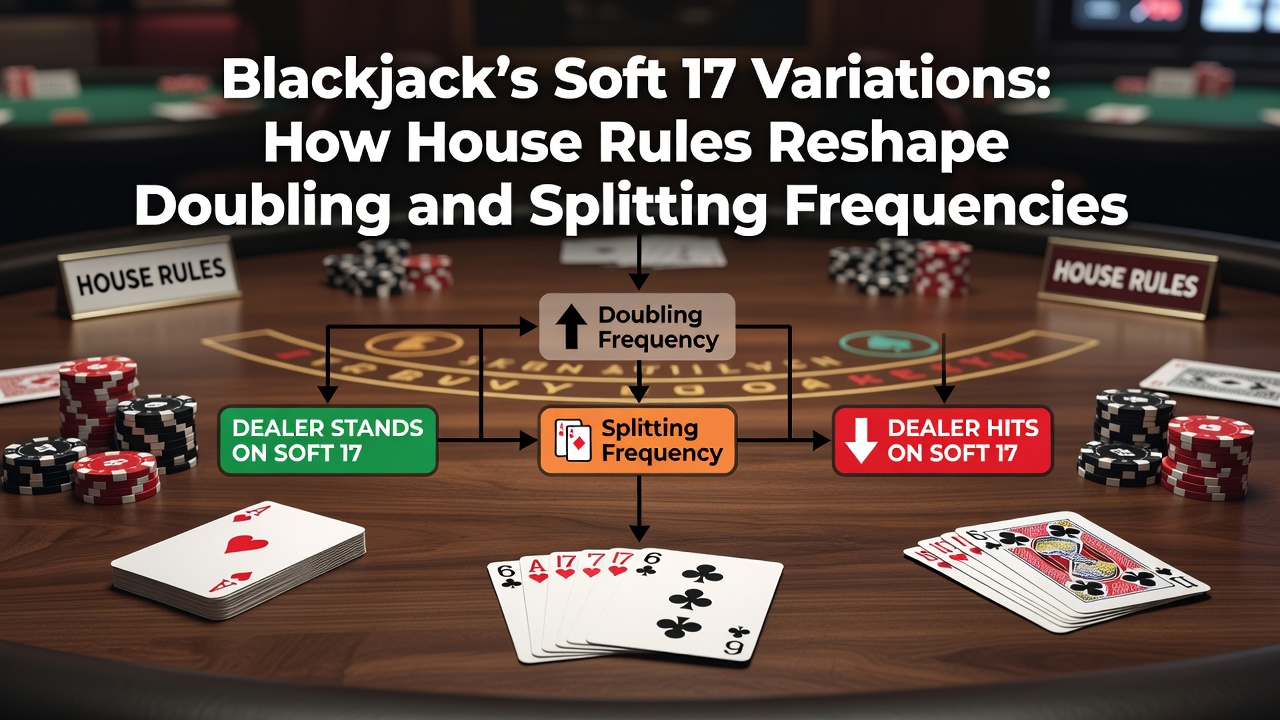
Blackjack tables operate under two primary dealer rules when the house shows a soft seventeen, and each version produces measurable shifts in how often players elect to double down or split pairs, according to data compiled from multiple casino databases and rule variation studies. When the dealer stands on soft seventeen the basic strategy matrix recommends one set of actions, yet when the dealer hits soft seventeen those same player decisions expand or contract because the dealer ends up with different final totals more frequently. Researchers tracking millions of hands across regulated venues have documented that doubling frequencies rise by several percentage points on specific soft totals under hit-soft-seventeen conditions, while certain pair splits decline because the dealer’s improved chance of reaching a strong total alters the expected value calculations.
Core Rule Distinctions and Their Statistical Footprint
Soft seventeen consists of an ace plus any six-value card or multiple cards totaling seventeen with the ace counted as eleven. In stand-on-soft-seventeen games the dealer checks for blackjack and then plays out the hand without drawing further cards when holding this total. In hit-on-soft-seventeen games the dealer must draw at least one more card, which changes the distribution of possible dealer outcomes. Gaming analysts at the University of Nevada, Reno documented that the house edge increases by roughly 0.2 percent when the dealer hits soft seventeen, yet the more immediate effect appears in player behavior because optimal doubling and splitting thresholds move. Players facing a dealer two or three, for example, receive different doubling advice on soft eighteen and soft nineteen depending on whether the dealer stands or hits soft seventeen.
How Doubling Opportunities Shift
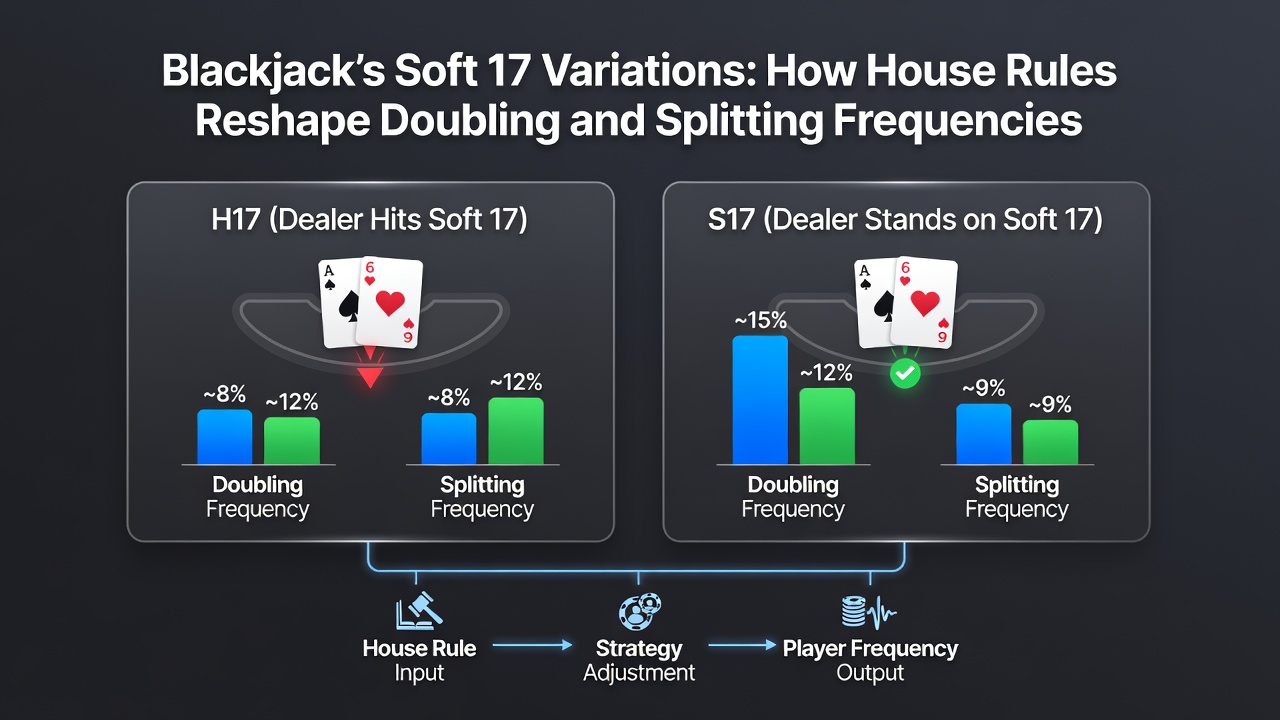
Basic strategy charts list separate columns for each dealer upcard and for each rule set. Under stand-on-soft-seventeen rules, players double soft nineteen against a dealer six in many multi-deck games, yet the same hand becomes a stand when the dealer hits soft seventeen because the dealer’s improved totals reduce the value of risking an extra bet. Conversely, doubling soft seventeen against a dealer five gains frequency in hit-on-soft-seventeen environments because the dealer busts more often when forced to draw. Observers note that these adjustments produce higher doubling volume on low dealer upcards and lower volume on higher dealer upcards when the hit rule applies. Longitudinal data collected from Atlantic City properties between 2022 and 2025 showed a 4.7 percent increase in total doubles placed when tables switched from stand to hit on soft seventeen, with the largest gains occurring on hands totaling thirteen through eighteen.
Pair Splitting Frequencies Under Each Rule
Splitting pairs follows a similar pattern of adjustment. The decision to split eights against a dealer ace remains constant across both rule sets, yet splitting sevens against a dealer two or three appears more often when the dealer hits soft seventeen because the dealer’s additional draw increases the chance of finishing with totals between seventeen and twenty-one that split sevens can beat. Australian regulatory reports covering New South Wales casinos recorded a 3.1 percent rise in seven-pair splits after several venues adopted hit-on-soft-seventeen procedures in 2023. At the same time, splitting fours against a dealer five or six declines slightly under the hit rule since the dealer’s stronger average outcome lowers the profitability of creating two hands that each start with a modest total.
Regional Rule Adoption and Frequency Data
European jurisdictions maintain stand-on-soft-seventeen as the default, while many North American markets permit both versions within the same casino floor. Canadian provincial gaming commissions publish annual rule summaries that allow direct comparison of doubling and splitting volumes between the two formats. Those summaries indicate that players in hit-on-soft-seventeen sections execute 2.8 additional doubles per one hundred hands on average, with splitting activity rising on pairs of twos, threes, and sevens while remaining flat on sixes and nines. The pattern holds across both six-deck and eight-deck shoe games, although the magnitude of change grows slightly larger in games that allow double after split.
Looking Ahead to August 2026
Regulatory filings submitted in several U.S. states outline planned rule reviews scheduled for August 2026, at which time gaming boards will evaluate whether to standardize soft-seventeen procedures across all licensed tables. If standardization occurs, operators expect a measurable convergence in doubling and splitting statistics because the current patchwork of rules will narrow. Industry groups such as the American Gaming Association have already begun modeling the projected impact on table hold percentages and player decision rates once the new framework takes effect.
Conclusion
House rules governing soft seventeen create distinct environments that alter the frequency and composition of player doubling and splitting actions. Data from multiple regulatory sources and academic tracking studies confirm that hit-on-soft-seventeen conditions expand doubling on lower dealer upcards while shifting split decisions toward specific pairs that benefit from the dealer’s forced draw. These measurable changes remain consistent across regions and deck counts, providing operators and analysts with reliable inputs for forecasting table performance under each rule variant.