Continuous Shuffle Machines Reshape Blackjack Counting Thresholds in Live Casino Environments
Logan Jenkins · Jul 24, 2026
Continuous Shuffle Machines Reshape Blackjack Counting Thresholds in Live Casino Environments
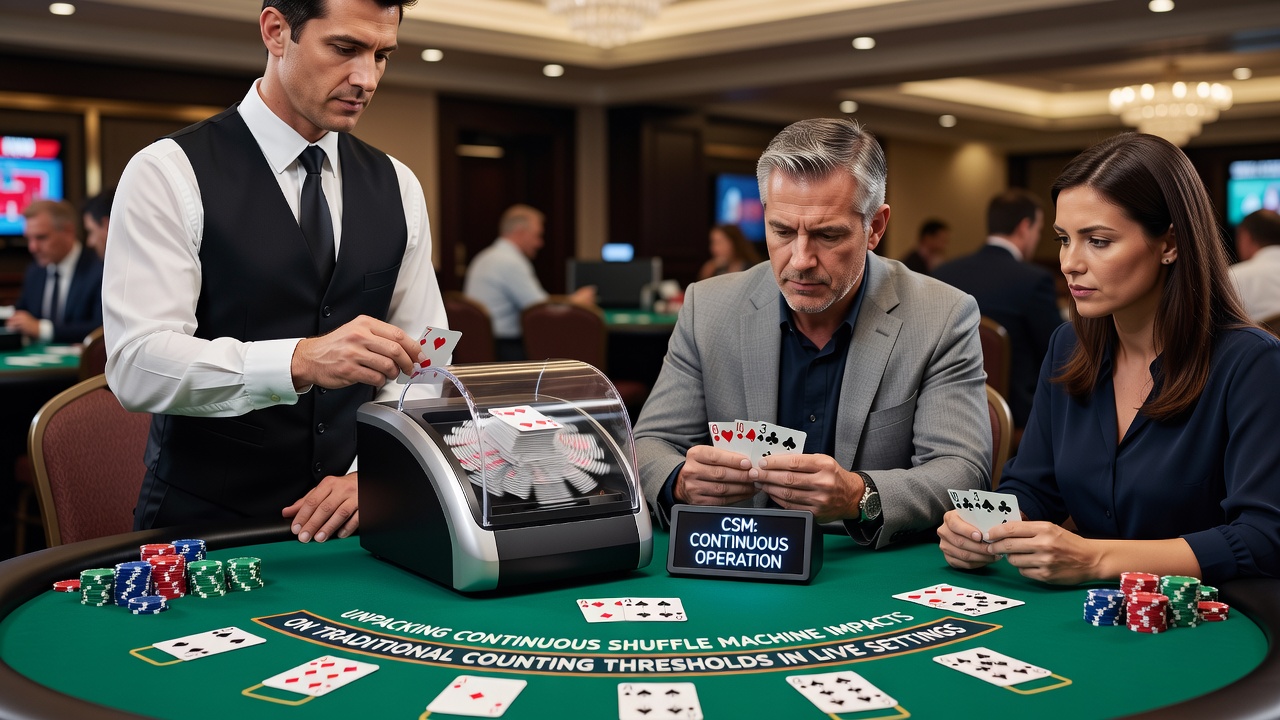
Continuous shuffle machines operate by returning discarded cards to an active shuffling chamber throughout a blackjack round, and this process limits the deck penetration that card counters traditionally rely upon for accurate true count calculations. Researchers from gaming studies programs have documented how these devices maintain a near-constant pool of cards, which prevents the running count from reaching the elevated levels seen in hand-shuffled or cut-card games.
Mechanics Behind Continuous Shuffle Technology
Manufacturers design continuous shuffle machines to interleave played cards back into the shoe at intervals ranging from every few hands to after each round, and this constant replenishment keeps the composition of the remaining deck closer to the initial 52-card distribution. Observers note that penetration typically drops below 50 percent when CSMs are in use, whereas traditional multi-deck setups allow counters to track cards through 70 to 80 percent of the shoe before reshuffling occurs.
Adjustments to Traditional Counting Thresholds
Standard Hi-Lo systems recommend raising bets when the true count climbs above +2 or +3 in multi-deck games, yet data from casino floor analyses indicate these thresholds lose predictive power once a continuous shuffle machine activates. The frequent reintroduction of low and high cards flattens count variance, which forces players to recalibrate entry points upward or abandon count-based betting altogether in many live settings.
Observed Shifts in Player Behavior
Surveillance reports compiled by state gaming agencies show that teams attempting classic count strategies at CSM tables experience reduced edge estimates, often falling below 0.5 percent even at counts that would have warranted aggressive wagers in a cut-card game. Those who've studied table dynamics find that some counters shift focus to side bets or abandon the table entirely once the machine's presence becomes clear.

Regional Variations in Machine Deployment
Nevada properties adopted continuous shuffle machines across many high-limit pits during the past decade, and Nevada Gaming Control Board reports track their spread through quarterly device inventories. In contrast, Australian casino regulators have permitted limited testing of similar technology while requiring operators to maintain minimum penetration standards that preserve some counting viability.
Mathematical Modeling of Reduced Edge
Academic papers published through university gaming research centers demonstrate that expected value curves flatten dramatically when shuffle frequency increases, and these models predict that traditional bet-spread ratios of 1-to-12 become unprofitable under CSM conditions. Figures reveal that the standard deviation of true counts compresses, which narrows the window for positive-expectation plays and raises the bankroll requirements needed to weather longer negative stretches.
Dealer and Floor Staff Adaptations
Dealers receive training to feed cards into the machine at consistent intervals, and this routine minimizes downtime while also eliminating the natural pauses that once allowed counters to update running totals between shuffles. Floor supervisors monitor for devices that might circumvent the machine's effect, such as electronic aids that attempt real-time penetration tracking, yet enforcement records from multiple jurisdictions show few violations tied directly to CSM tables.
Industry Data on Player Response
Trade association surveys indicate that recreational counters often migrate to tables without continuous shuffle devices when available, and this movement has prompted some properties to designate specific pits as CSM-free zones to retain a broader player demographic. What's interesting is how these designations sometimes appear on floor maps distributed at the property rather than through public announcements.
Future Regulatory Considerations
Discussions among gaming commissions in several North American regions continue to examine whether CSM deployment requires updated disclosure rules or player-education mandates, and analysts expect further guidance documents to emerge by mid-2026 that could standardize reporting on shuffle frequency and its measured effects on game volatility.
Conclusion
Continuous shuffle machines have altered the practical application of traditional counting thresholds by restricting penetration and compressing count variance, and these changes compel both players and operators to reassess long-standing strategies. Data from regulatory filings and academic models continue to quantify the extent of those adjustments across live casino floors.