Automatic Shufflers Reshape Blackjack Player Patterns: A Review of Behavioral Data Trends
Logan Jenkins · Jun 3, 2026

Automatic Shufflers Reshape Blackjack Player Patterns: A Review of Behavioral Data Trends
Automatic shufflers have become standard equipment in many casino environments over the past decade, and researchers have tracked measurable changes in how players approach table games once these devices appear. Data from multiple jurisdictions shows shifts in session length, bet sizing, and game selection that coincide with the transition from hand shuffling to continuous or batch shuffling machines.
Player Volume and Session Duration Metrics
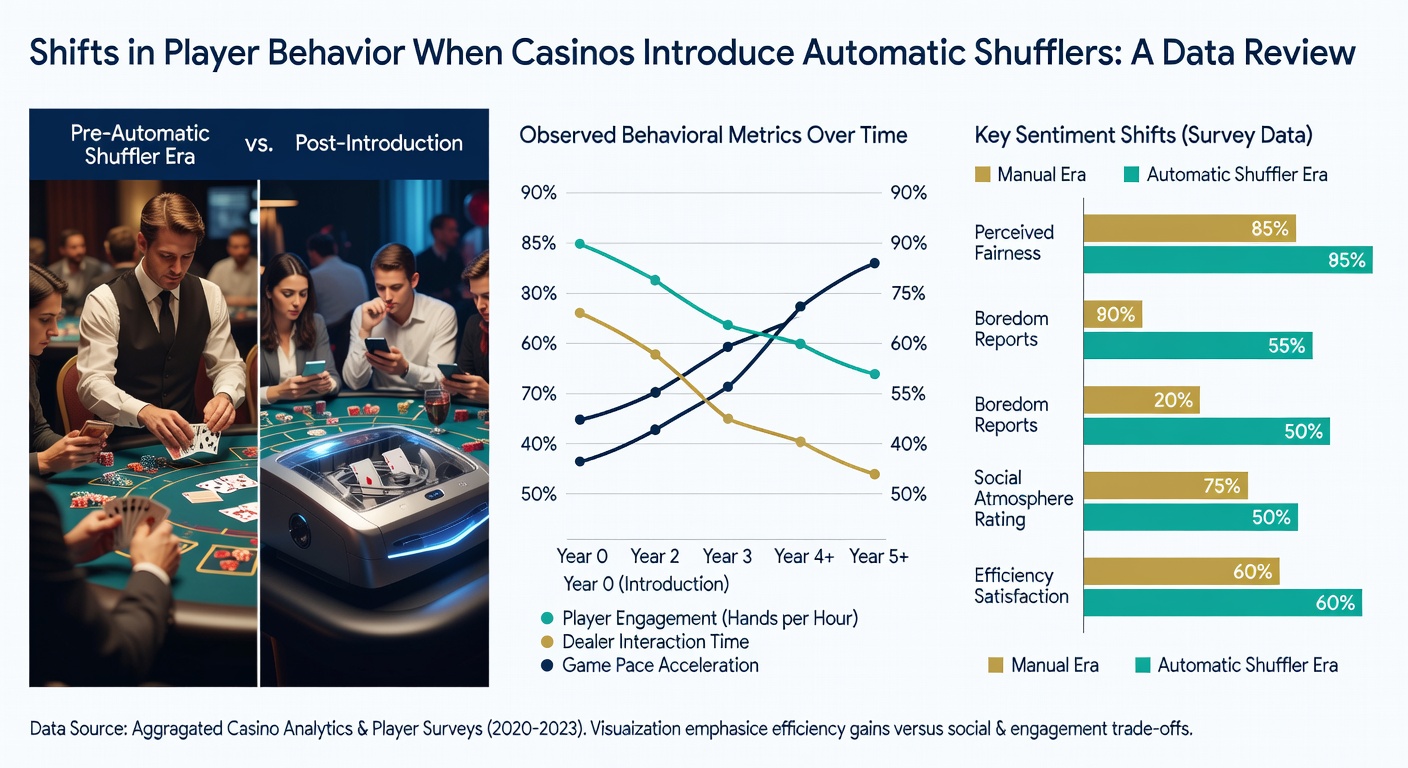
Figures compiled by the Nevada Gaming Control Board indicate that blackjack tables equipped with automatic shufflers often record higher average hands per hour, which correlates with longer average player dwell times at those tables compared with hand-shuffled counterparts in the same property. Observers note that participants tend to remain seated through more rounds because the interval between hands shortens noticeably, reducing the natural breaks that once prompted some players to step away.
Betting Pattern Adjustments
Studies conducted at university-affiliated gaming research centers reveal that players frequently increase their average wager size within the first thirty minutes after an automatic shuffler installation becomes operational. The faster pace appears to encourage incremental bet raises, particularly among recreational participants who respond to the steady rhythm of dealt hands. Data sets from properties in Atlantic City and Las Vegas show this pattern holds across both low-limit and high-limit sections, although the magnitude of increase varies by demographic group.
Card counters and advantage players represent a distinct subgroup whose behavior diverges from the broader population. Multiple tracking reports document a decline in the number of identified counters occupying seats at tables with continuous shuffling machines, while casual players fill those seats at higher rates. This redistribution alters table composition and changes the overall atmosphere observers record on surveillance logs.
Game Selection and Table Hopping Trends
Industry reports from the Canadian Gaming Association highlight that players who previously rotated among several blackjack tables now tend to remain at a single automatic shuffler table for extended periods. The reduction in shuffle time removes one common trigger for table changes, leading to more static seating charts during peak hours. Analysts tracking loyalty card data find that repeat visits to properties with widespread shuffler adoption show slightly elevated per-visit spend on table games, even when overall player counts remain stable.
Additional patterns emerge when comparing properties that introduced shufflers in phases. Tables converted during 2024 and early 2025 demonstrated consistent upticks in hands played per player visit, according to aggregated floor management systems. Those same systems recorded fewer instances of players leaving mid-shoe, a behavior once common when manual shuffles created predictable pauses.
Regional Variations in Response Data
Information gathered by Australian state gaming regulators shows parallel movements in player behavior at venues that upgraded to batch shufflers, with session lengths extending by measurable margins in monitored locations. European properties adopting similar equipment have reported comparable results in internal audits shared with trade associations, although regulatory frameworks differ enough to complicate direct cross-border comparisons.
What's interesting is how these shifts intersect with broader industry timelines. As properties continue equipment refreshes heading into mid-2026, ongoing data collection will allow further comparison of pre- and post-installation metrics across additional markets. Researchers continue to examine whether the observed changes in betting tempo and table persistence persist once players acclimate to the new equipment over multiple visits.
Conclusion
Available datasets demonstrate clear correlations between automatic shuffler deployment and adjustments in player session behavior, betting increments, and table selection patterns. Continued monitoring through regulatory and academic channels will refine understanding of these dynamics as adoption expands.